Hard Water in Bullhead City and What It Does to Your Plumbing
Mineral scale wears out faucets, toilets and water heaters early, and this guide shows you how to slow it down.
See where scale does damageSigns your home has a scale problem
Scale from Bullhead City hard water builds slowly, so most people notice the small signs long before anything fails. If you see several of these around the house, the minerals are already working on the parts you cannot see.
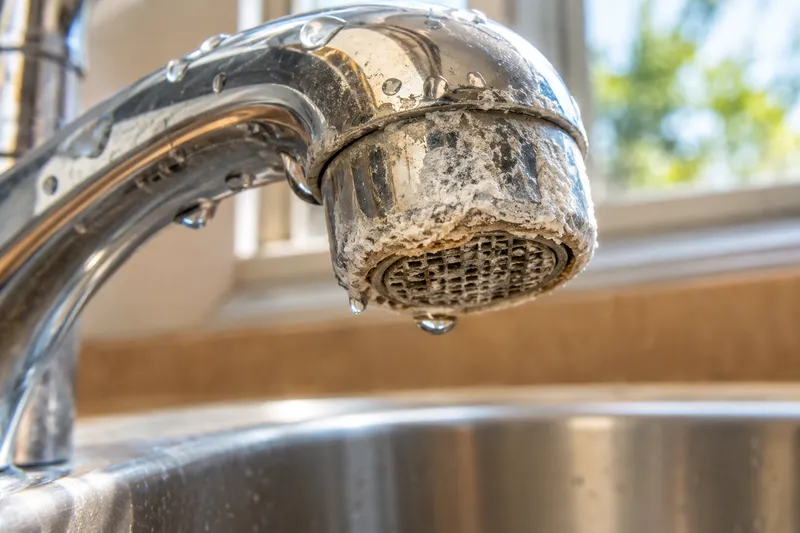
- White or tan crust around faucet spouts, shower heads and drain rings
- Cloudy spots on glasses and dishes after a wash
- Weak flow from one faucet or shower while the others are fine
- A toilet tank that hisses or refills by itself
- Popping, rumbling or ticking from the water heater as it heats
- Hot water that runs out sooner than it used to
- Soap that will not lather well and a film left on the tub
How scale affects each part of your plumbing
Some scale damage is a cleaning job, and some means a part has worn out. This table shows the difference.
| Part | What scale does to it | What usually helps |
|---|---|---|
| Faucet aerator | Blocks the screen and cuts the flow | Unscrew it, soak it in white vinegar and rinse it |
| Faucet cartridge | Wears the seals, causing drips and a stiff handle | Replace the cartridge with faucet repair |
| Shower head | Blocks nozzles and makes the spray uneven | Soak it in vinegar or replace the head |
| Toilet fill valve and flapper | Stops the valve shutting off and the flapper sealing | Replace the worn part with toilet repair |
| Tank water heater | Builds sediment that pops and shortens tank life | Flush the tank or book water heater repair |
| Tankless water heater | Coats the heat exchanger and trips error codes | Descale it on a schedule or book tankless repair |
When the outside of a fixture looks clean but the problem keeps coming back, the scale is inside, and the part itself usually needs replacing.
Why desert heat makes scale build faster
Warm water holds minerals less well than cold water, so anything that heats your water speeds up scale. In a Bullhead City summer that includes more than the water heater. Supply pipes in hot attics, outside walls and garages warm the water sitting inside them for hours every day.
Dry air plays a part too. Splashes around faucets, shower doors and hose bibs evaporate quickly and leave their minerals behind as a crust. That is why fixtures here can look scaled within weeks of a good cleaning.
None of this means your plumbing is doomed. It means the small upkeep jobs on this page matter more here than in a cooler, damper place, and that worn parts are worth replacing before they fail.
Why water heaters take the hardest hit
Heating water makes minerals fall out of it faster, so a water heater collects more scale than any other part of the house. In a tank heater, the scale settles on the bottom as a layer of sediment. The burner or element then has to heat through that layer before it reaches the water.
That extra work brings popping sounds, slower recovery and hot spots that wear the tank lining. Draining a few gallons from the tank on a regular schedule removes much of the loose sediment before it hardens.
If the tank already leaks at the base, or the drain valve will not open, leave it alone and call us. A plumber can tell you whether a repair makes sense or whether the tank is simply worn out.
Learn how to flush a water heater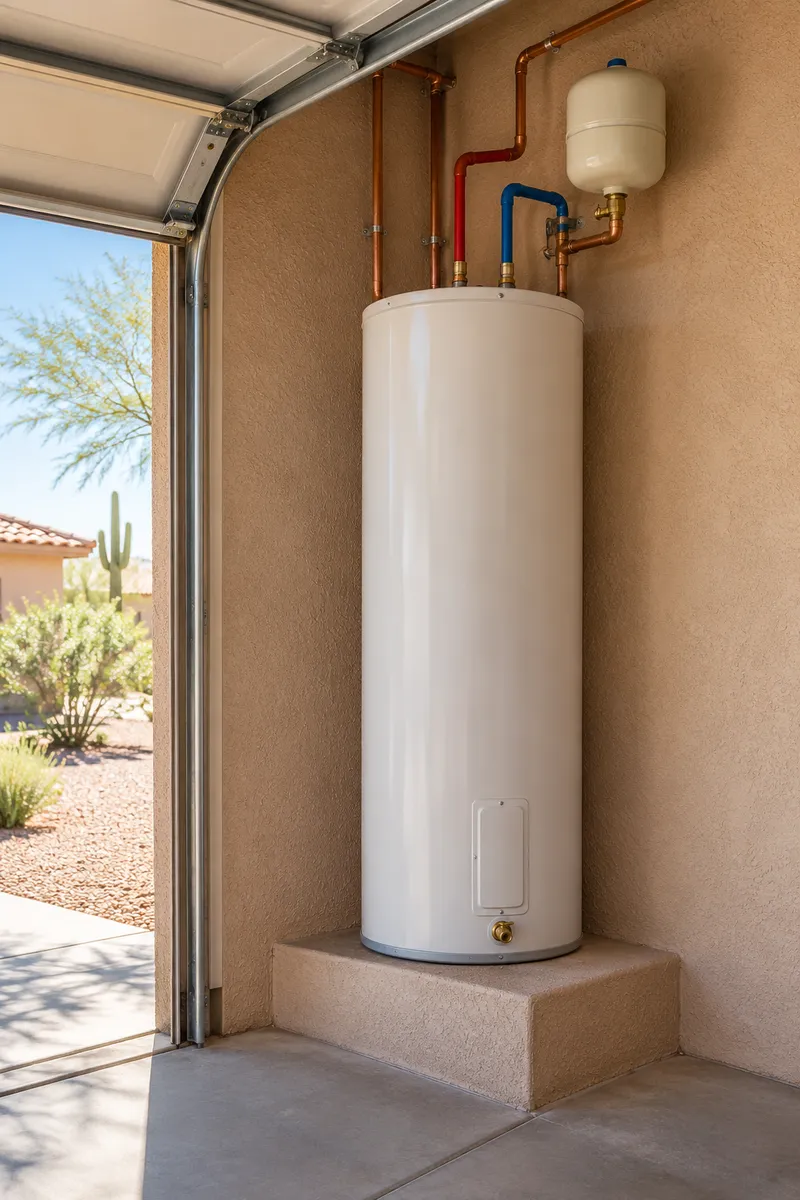
How to clear scale from an aerator and a shower head
This is the easiest scale job in the house and needs only a towel, a bowl and some white vinegar.
Take it off
Wrap the aerator or shower head in a towel and unscrew it by hand or with gentle pliers so the finish does not get scratched.
Soak it
Drop it into a bowl of plain white vinegar and give it an hour or two. For a fixed shower head, tie a bag of vinegar around it instead.
Brush and rinse
Scrub the screen and nozzles with an old toothbrush, then rinse well under running water.
Put it back
Screw it back on hand tight and run the water to check the flow and look for drips at the threads.
If the flow is still weak after a clean aerator, the scale is further inside the faucet. A plumber can check the cartridge and the supply valves below the sink.
Tankless water heaters need descaling on a schedule
A tankless heater warms water as it passes through narrow passages in the heat exchanger. Hard water coats those passages faster than you might expect, and the unit responds by reducing flow, showing a code or shutting down.
Most units have service valves that let a pump circulate a descaling solution through the heater. Follow the maker's instructions for your model, or have a plumber do it. If codes keep returning after a flush, read about tankless water heater repair.
Water softeners explained in plain terms
A softener is the most common way homeowners deal with hard water. Here is what it does and what it needs.
What a softener does
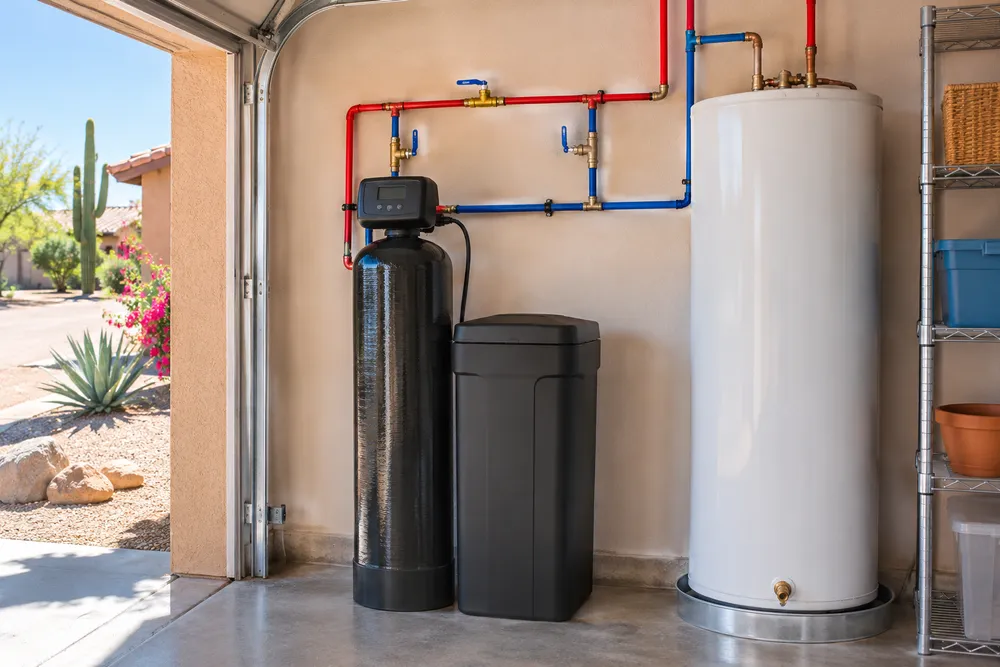
A softener swaps the hardness minerals in your water for sodium or potassium as the water passes through a tank of resin beads. The softened water leaves far less scale on fixtures and inside heaters.
What it needs from you
The brine tank beside the softener needs salt topped up regularly. Now and then the salt forms a hard crust called a bridge, and the softener stops working even though the tank looks full. Pushing a broom handle down through the salt breaks it up.
When a softener causes plumbing trouble
A softener that regenerates too often, or gets stuck in a cycle, can send water down the drain for hours. If your water use jumps for no clear reason, our guide on why your water bill is so high explains how to check it.
Filters are a different thing
A filter under the sink or on the fridge line improves taste and removes some particles, but it does not soften water. Scale will still form in your faucets and heater with only a filter in place.
Scale jobs you can do yourself and jobs for a plumber
Plenty of hard water care is simple upkeep. Some of it involves parts that are easy to damage or that need the water shut off.
Leave these to a plumber
- Replacing a faucet cartridge that drips or sticks
- Changing a toilet fill valve or flapper that keeps failing
- Draining a water heater that leaks or has a stuck drain valve
- Descaling a tankless unit that shows repeat error codes
- Replacing scaled shut off valves under sinks and toilets
- Fitting a bypass or new connections for a water softener
You can handle these
- Cleaning aerators and shower heads with vinegar
- Wiping crust from faucets and drain rings before it hardens
- Draining a little water from a healthy tank heater on schedule
- Topping up softener salt and breaking up salt bridges
- Checking under sinks for crusty valves and damp spots
- Noticing when a toilet starts topping itself up
A hard water checklist for twice a year
Pick two dates you will remember, such as the start of summer and the start of winter, and work through this list each time.
- Unscrew and soak every faucet aerator and shower head in the house
- Look under each sink for white crust on the shut off valves and supply lines
- Lift the toilet tank lids and check the flapper and fill valve for buildup
- Drain a little water from the bottom of a tank heater and see how cloudy it runs
- Check the tankless unit for codes and note when it was last descaled
- Top up softener salt and make sure the salt has not formed a crust
- Turn each shut off valve a little to make sure it still moves, without forcing it
Write down what you find each time. A valve that gets stiffer or a heater that drains cloudier water every visit is a part to have looked at before it gives out. If a valve will not turn at all, our guide to finding the main water valve shows the one to rely on in an emergency.
Hard water questions from Bullhead City homeowners
Is hard water safe to drink?
Hard water is a plumbing nuisance rather than a health issue for most people. The minerals in it are the same ones found in many foods. The trouble it causes is the scale it leaves behind in fixtures, appliances and water heaters.
Does hard water damage pipes?
Copper and plastic pipes usually cope well, though scale can narrow older galvanized steel pipe over time. The bigger damage happens in valves, cartridges and heaters, where small moving parts and heat make scale build faster. If you have a leak to deal with, see pipe repair.
How often does a tank heater need flushing here?
With hard water in Bullhead City, a light flush once or twice a year keeps sediment from building up. Our guide to flushing a water heater covers each step and tells you when the job belongs with a plumber instead.
Why does my toilet keep running?
In homes with hard water, scale on the flapper seat or inside the fill valve is a common cause. Cleaning the seat sometimes helps for a while, but replacing the worn part is the lasting fix. Our toilet repair page explains the options.
Will a water softener fix the scale already in my fixtures?
Softened water slows new scale but does not remove much of what is already there. Heavily scaled cartridges, valves and toilet parts usually need cleaning or replacing, and an older tank heater full of sediment may need more than a flush. A softener protects new and freshly cleaned parts best.