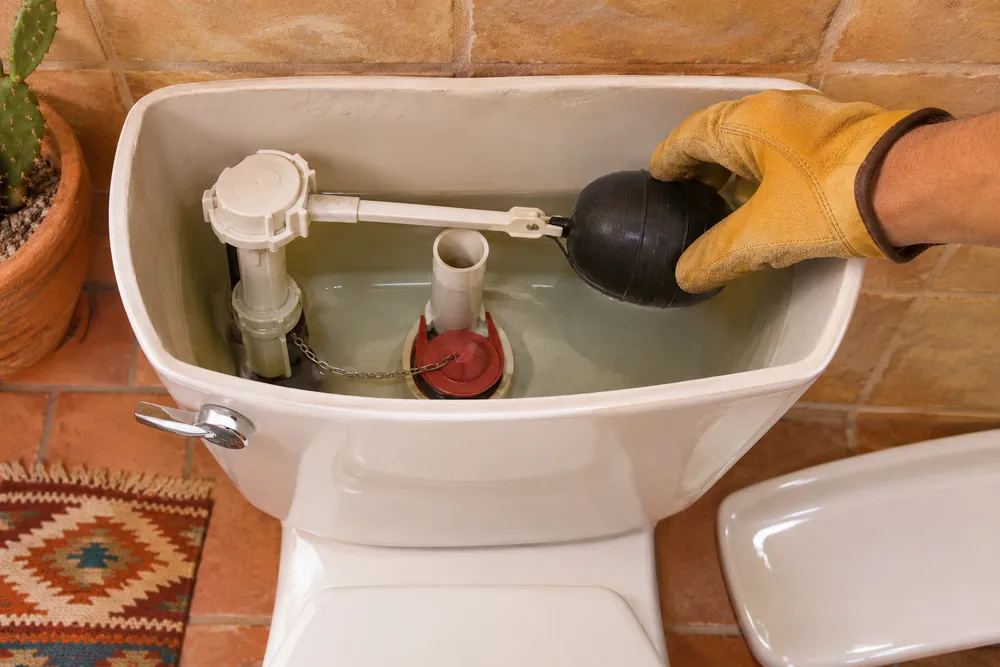
Toilet Repair in Bullhead City, AZ
A licensed plumber who works in Bullhead City can fix a toilet that runs, rocks on the floor or leaks around the base.
Match your toilet problemWhat your toilet is doing and which part is usually to blame
Toilet repair in Bullhead City nearly always involves one of a few parts in the tank or beneath the bowl. Find the line in this table that fits your toilet to judge how quickly it needs attention.
| What you notice | The part usually at fault | How urgent it is |
|---|---|---|
| You hear the tank top itself up when nobody has flushed | A flapper that no longer seals, so water seeps into the bowl | Book a visit soon, because it wastes water around the clock |
| Water keeps running after the flush | A fill valve stuck open or a float set too high | Close the valve behind the toilet until it is fixed |
| Flush is weak and the bowl barely clears | Mineral buildup in the rim openings, or a flapper that drops shut too soon | Can wait for a booked visit |
| Bowl shifts when someone sits down | Loose bolts at the floor or a squashed wax ring | Book soon, since the movement breaks the seal |
| Water on the floor around the base | A failed wax ring or a cracked bowl | Call today and stop using that toilet |
| Drips under the tank | Worn tank bolt washers, a tired tank gasket or an old supply line | Call today if it drips steadily |
A hissing tank usually means the fill valve is wearing out. Scale from hard water is a common reason fill valves give up early in desert homes.
Water around the base of the toilet
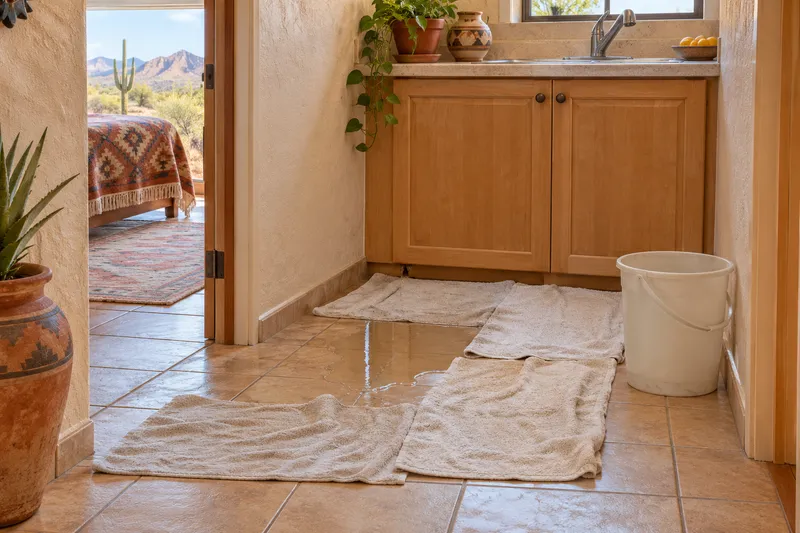
A puddle at the base is the toilet problem not to put off. Water that escapes under the bowl soaks into the subfloor or along the slab, and it can spread under tile and baseboards before you see much on the surface.
Start by tracing the source. Wipe the floor dry, then look at the supply line, the tank bolts and the seam where the tank meets the bowl. If those stay dry and water returns at the base after flushing, the wax ring has almost certainly failed.
Stop using that toilet until it is repaired. The plumber lifts the bowl, replaces the wax ring and floor bolts, checks the flange underneath and sets the toilet back level so it cannot rock.
How toilet repair in Bullhead City is done on a visit
Look at the whole toilet
The plumber flushes it a few times, listens to the fill valve, checks the flapper seal and looks for water at the bolts, the supply line and the base.
Explain the fix
You hear which part has failed and why, and whether a single part will do or a full rebuild of the tank makes more sense.
Replace the worn parts
Water is shut off at the stop valve and the tank is drained. New parts go in and are adjusted to the right water level.
Test for leaks
The toilet is flushed several times while the plumber watches the refill and checks every connection for drips.
Less common toilet problems
Most toilet repair in Bullhead City is one of the jobs above, but a few problems turn up less often and are easy to miss.
A tank that refills by itself in the night
If the tank refills briefly when nobody has flushed, the flapper is letting water seep down into the bowl. To confirm it, add a little food dye to the tank and wait thirty minutes without flushing. Colored water in the bowl means the flapper needs replacing.
This is one of the most common reasons for a higher water bill. Our guide on why your water bill is so high explains other places to look.
A toilet that clogs again and again
Repeated clogs in one toilet can come from a partial blockage inside the bowl, an older low flow model with a weak flush, or scale narrowing the rim jets. An auger usually clears the bowl.
If a tub or sink near the toilet also drains slowly, the shared line needs attention. Our drain cleaning page covers that job.
A cracked tank or bowl
Porcelain can crack from a hard knock or from bolts tightened too far. A crack below the waterline will leak, sometimes slowly at first. Cracked porcelain cannot be repaired safely, so the plumber will talk you through replacing that piece or the whole toilet.
A shut off valve that will not turn
The small valve behind the toilet often goes untouched for years. Scale can lock it in place or make it leak when someone finally turns it. A plumber can replace it while the water is off, which makes future repairs easier.
If you cannot close it in a hurry, use the main valve instead. Our guide to finding the main water valve shows where it usually is.
Why toilets in hard water homes need attention sooner
Minerals in the water affect every part inside the tank.
Hard water leaves scale on the fill valve, the flapper seat and the small rim holes that wash the bowl. Each part wears a little faster than it would with softer water.
You may notice a white or brown ring inside the bowl, a weaker flush or a fill valve that hisses. None of these needs an urgent call on its own, but together they mean the tank parts are near the end of their life.
A plumber can replace all the tank parts in one visit so the toilet flushes properly again, which is often simpler than chasing one worn part at a time. The bowl and tank usually last a long time if the seals are kept in good order. Read more in our guide to hard water and your plumbing.
Two checks you can do in five minutes
Take the lid off the tank and check the water level. It should stop a little short of the top of the overflow tube, roughly an inch down. Water spilling into the tube means the float or fill valve needs adjusting.
Then hold the bowl at the front and try to rock it gently. Any movement means the bolts are loose. Do not crank them tight yourself, because porcelain cracks easily. A plumber can reseat the bowl on a new wax ring instead.
Toilet questions we hear most often
Is a running toilet an emergency?
Not usually, though it wastes water day and night. Shut the supply valve behind the toilet when it is not in use and book a repair. If the bowl overflows or water appears at the floor, call right away. A running toilet is also one of the most common reasons a water bill climbs for no obvious reason.
Can a toilet be repaired instead of replaced?
Most toilets can be repaired. Flappers, fill valves, handles, seals and bolts can all be replaced. A new toilet only makes sense when the porcelain is cracked or the toilet keeps failing despite new parts.
Why does my toilet hiss?
A hiss almost always means the fill valve is not closing fully, often because scale has worked into it. A water level set too high, so that water trickles into the overflow tube, makes the same sound. Either way, a new or adjusted fill valve usually ends it.
What should I do when the toilet overflows?
First lift off the tank lid and hold the flapper shut by hand so the bowl stops filling. Next, close the little supply valve near the floor by turning it to the right. If that valve is stuck, our plumbing emergency steps explain how to shut off water to the whole house.
The floor gets wet only after a flush. What does that mean?
A puddle that appears only after flushing points to a failed wax ring under the bowl or a crack low in the bowl. Stop using the toilet and book a repair, because each flush sends more water under the floor.
Can a plumber set a new toilet if mine is beyond repair?
Yes. When a toilet is cracked or worn out, the plumber can remove it and set a new one with a fresh wax ring, new bolts and a new supply line.