Slab Leak Repair in Bullhead City, AZ
If a floor feels warm or your water meter keeps turning, a licensed local plumber can find the slab leak and repair it.
Learn how a slab leak is foundSlab leak repair in Bullhead City starts with finding the exact spot
Most homes in Bullhead City are built on a concrete slab, and many of them have copper or PEX water lines running through or under that concrete. When one of those lines springs a leak, the water soaks into the slab and the soil below it.
Slab leak repair in Bullhead City is mostly about finding that leak without tearing up the whole floor. The repair itself is often the smaller part of the job.
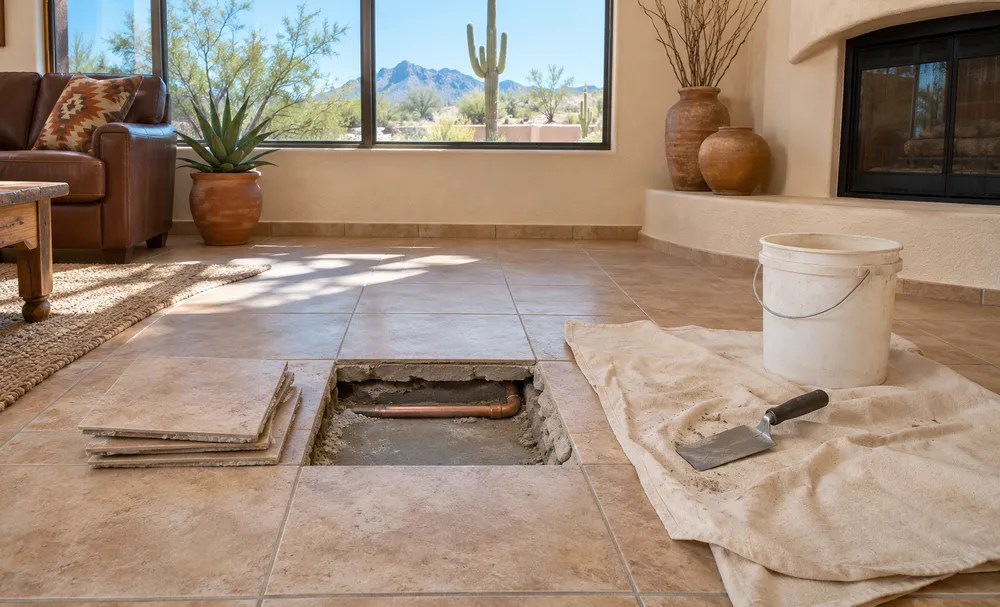
A plumber uses listening gear, pressure tests and moisture readings to close in on one small patch of floor. Then the repair can be made through one small opening, or the line can be rerouted through the walls or attic so the slab is left alone.
Either way, the plumber explains what they found and how they would fix it before any concrete is touched. You decide which route makes sense for your home, and nothing is opened until you agree.
- Hot and cold supply lines under concrete floors
- Copper lines with pinhole leaks and worn spots
- PEX and older pipe runs that pass under the slab
Clues that water is leaking under your floor
A slab leak rarely shows itself as a puddle at first. Look for these quieter signs, and take them seriously when two or more show up together.
- A warm or hot patch on tile or concrete, often in a hallway, kitchen or bathroom
- The sound of running or hissing water when every tap in the house is off
- A water meter that keeps moving with nothing running inside or outside
- Damp carpet, a musty smell or a stain spreading along the base of a wall
- New cracks in floor tile or grout that seem to grow over a few weeks
- Hot water that runs out sooner, or a heater you hear firing far more often than before
- A water bill that jumps without any change in how your household uses water
- Lower water pressure at every fixture in the house
A warm spot almost always points to the hot water line, because the heater keeps pushing heated water into the leak. If the meter moves but nothing feels warm, the leak is more likely on a cold line or out in the yard.
Check the water meter before you call us
Shut every faucet and stop the dishwasher, washer, ice maker and irrigation timer. Then find the meter box near the street and lift the lid. Most meters carry a small leak dial that turns at the slightest flow.
If it turns while everything is off, water is leaving the pipes somewhere. Write the reading down, wait an hour without using any water and look again. Tell us both readings when you call. Our guide on why your water bill is so high explains this test in more detail.
How a plumber pins down a leak under concrete
Every slab leak repair in Bullhead City starts with this search, and it takes patience and the right tools. This is the usual order of work once the plumber is in your home.
Isolate the lines
The plumber closes valves and tests the hot and cold systems on their own, so you know which line is losing water before anything else.
Pressure test
A gauge on a hose bib or the water heater shows whether the line holds pressure. A steady drop confirms a leak in that section.
Listen and scan
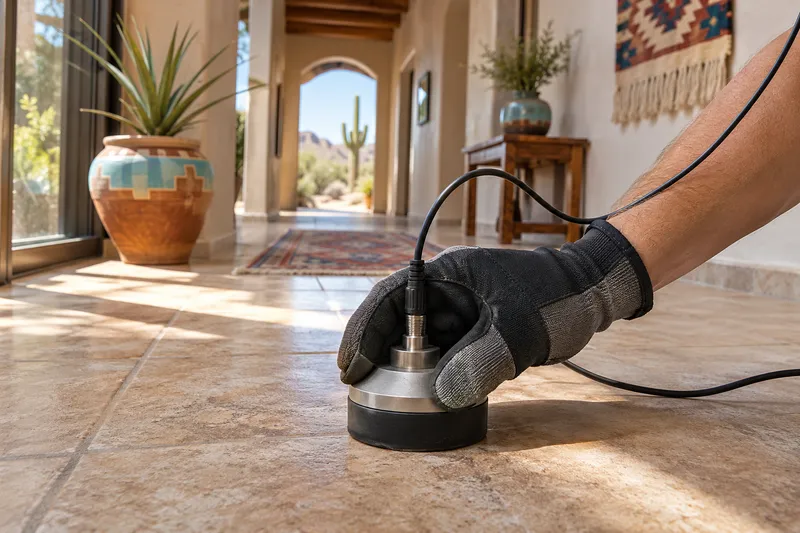
Acoustic listening gear picks up the hiss of escaping water through the floor, and thermal imaging shows warm water spreading under tile.
Mark the spot
Moisture readings and the sound pattern narrow the leak to a small area, which is marked on the floor before any repair is planned.
Good leak finding keeps the opening small. That means less broken tile, less dust and a shorter repair. If the leak turns out to be outside the slab, the plan changes, and the plumber tells you why.
Why so many Bullhead City homes end up with a slab leak
Building on a concrete slab is common across Bullhead City, and it makes sense in a hot, dry climate. The tradeoff is that the water lines feeding kitchens and bathrooms often run under or through that concrete, where nobody can see them for decades.
Hard water, high water pressure and the daily heating of the hot line all add wear. None of this means a leak is certain, but it explains why a Bullhead City plumber checks the slab early when a meter moves for no clear reason.
If you have noticed any of the clues listed earlier on this page, write down when you first saw them and whether they changed. That timeline helps the plumber judge how long the leak has been running and how far the water may have spread.
A pressure regulator that keeps household pressure in a normal range and a water heater that is not set hotter than needed both take some strain off pipes under the floor. The plumber can check both during the visit.
Three ways to fix a slab leak, and when each one fits
Slab leak repair in Bullhead City usually takes one of three forms once the leak is found. The plumber will tell you which one they recommend for your house and explain why.
| Repair | What the plumber does | When it usually makes sense |
|---|---|---|
| Spot repair through the slab | Opens a small section of floor over the leak, cuts out the damaged pipe, joins in new pipe and closes the concrete again | A single leak on a line that still looks healthy elsewhere |
| Reroute above the slab | Abandons the leaking section under the floor and runs new pipe through walls, ceilings or the attic to the same fixtures | The line has leaked before, or the leak sits under cabinets, a shower or flooring you want to keep |
| Replace a full line | Replaces the whole hot or cold run that serves part of the house with new pipe | Several leaks on the same line, or pipe that is worn thin along its length |
Rerouting often means fewer holes in your floor, but it depends on how the house is framed and where the fixtures are. A spot repair can be the simpler choice when the leak is in an open area such as a hallway.
When the leak turns out to be in the yard
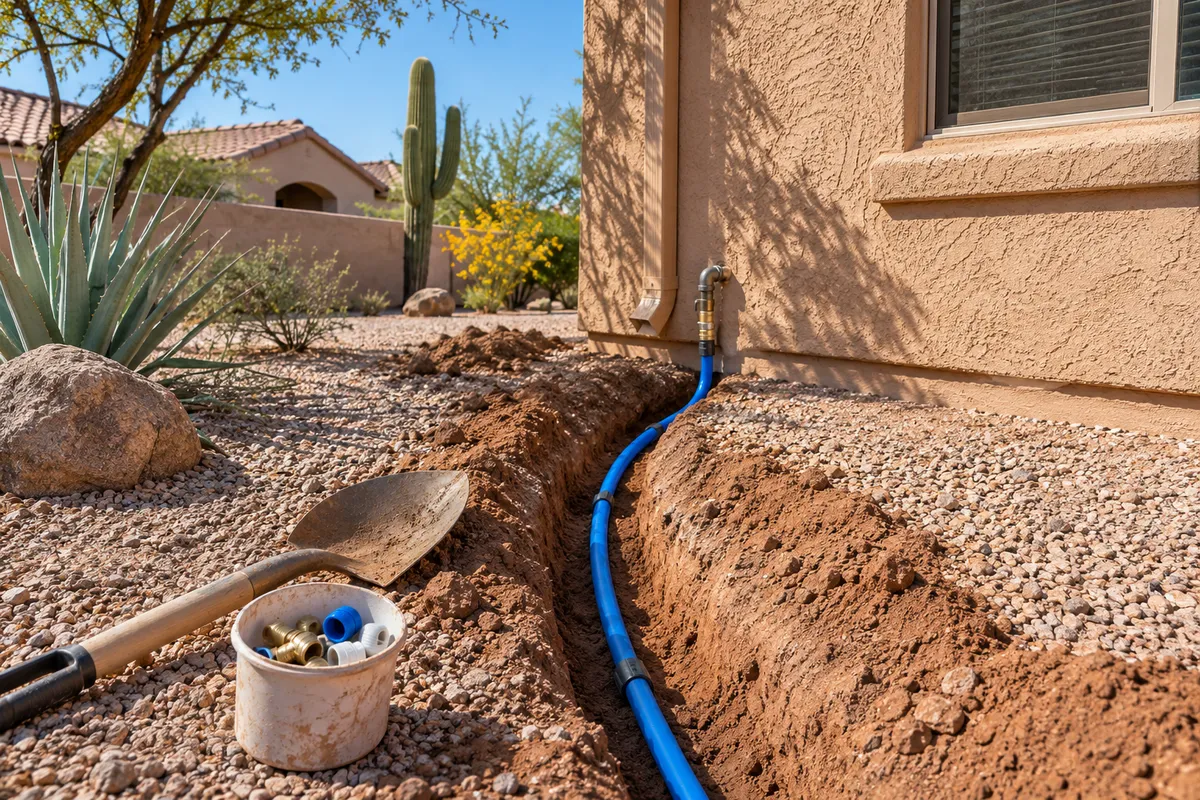
Not every leak that sets the meter spinning is under the house. The buried supply line that runs from the meter to your wall can fail too, and in a gravel yard the water often soaks away out of sight.
If the pressure tests show the house lines are holding, the plumber checks that outside line next. A soggy patch, a sunken spot or green growth in a dry yard can confirm it. That job is covered on our water line repair page.
When a slab leak needs the water shut off today
Some slab leaks drip for weeks and some get worse quickly. Use this to judge how fast to act, and call us if you are unsure.
Close the main valve and call now if
These signs mean water is moving fast or reaching things it can damage.
- Water is coming up through the floor, grout or carpet
- A floor is hot to the touch, not just slightly warm
- The meter is spinning fast with everything turned off
- Water is reaching an outlet, a wall or stored belongings
- You can hear water rushing under the floor
A booked visit is usually fine if
These signs still need a plumber, but you have time to book a visit that suits you.
- The meter moves slowly and only during the leak test
- A faint warm patch has not changed in days
- The water bill rose but nothing in the house looks wet
- You only notice the sound late at night when the house is quiet
- Hot water lasts a little less than it used to
More about slab leaks in desert homes
Open these for the details homeowners usually ask about once the leak is found.
What wears out pipes under concrete
Water lines beneath a slab rest against concrete and soil for their whole life. Small movements of the ground, the pipe rubbing where it passes through concrete and the daily swing between hot and cold water all wear at the pipe wall over time.
Hard water plays a part as well. Minerals and the water itself slowly wear the inside of copper lines, and a weak spot can become a pinhole. Read more about hard water and your plumbing.
Why the hot water line leaks more often
The hot line heats up and cools down many times a day, so it expands and contracts more than the cold line. Hot water is also harder on pipe walls. That is why so many slab leaks are found on the hot side.
A leak on the hot line also keeps your water heater working to refill the tank. If the heater seems to run constantly, mention it on the call, because it helps the plumber know where to look first.
What happens to the flooring
With a spot repair, the plumber opens only the area needed to reach the pipe. Tile, carpet and wood floors are put back by a flooring installer once the concrete has set, and the plumber can tell you how much floor will need to come up.
With a reroute, the floor usually stays untouched and the work happens in walls or the attic instead. Small drywall openings are patched afterwards.
Drying out after the repair
Water that soaked into the slab and the soil takes time to dry. Running fans and keeping the area open helps. If carpet padding, baseboards or cabinet bottoms got wet, check them for swelling or a musty smell over the next few weeks.
If the leak ran for a long time, ask the plumber whether the area needs professional drying. Talk to your home insurer early, before any repair work covers the damage up.
Keeping records of the repair
Ask the plumber to note where the leak was, which line it was on and how it was repaired. Take a few photos of the open floor before it is closed.
Those notes help if another leak appears later, and they are useful if you ever sell the house or speak with your insurer about the work.
Lowering the chance of another leak
Ask the plumber to check your household water pressure with a gauge. Pressure that runs high puts extra strain on every pipe, including the ones under the slab, and a pressure regulator can bring it down.
Dealing with hard water helps too. Softer water leaves less scale in pipes, valves and the water heater, and the heater has an easier time when it is flushed of sediment once or twice a year.
Slab leak questions from Bullhead City homeowners
How do I know the leak is under the slab and not in a wall?
A leak in a wall usually shows as a stain, bubbling paint or a damp baseboard. A slab leak tends to show as a warm floor, a hissing sound low down or a meter that moves with no wet spot anywhere. Pressure tests and leak detection settle the question, so the plumber is not guessing where to open anything.
Is it safe to use water before the plumber gets here?
With a small leak on the hot line, shutting the valve on the cold inlet pipe above the water heater can slow it. Close the main valve as soon as water seeps up through tile or carpet. Our plumbing emergency steps cover what else to do.
Will the whole floor have to be broken up?
No. Careful leak finding narrows the leak to a small area, so most slab leak repair in Bullhead City homes needs only a small opening. If the plumber recommends a reroute, the floor may not need to be opened at all.
Is rerouting better than fixing the pipe under the slab?
The answer depends on the house. A reroute avoids opening the floor and replaces a line that may leak again. A spot repair can make more sense for a single leak in an open area. The plumber explains both options for your home, including how much of the floor or wall each one would disturb.
Is a slab leak bad for the foundation?
Water running under a slab for a long time can wash out soil and soak into the concrete, which is why a leak should not be left to run. Fixing the leak early is the best way to limit that risk.
What should I do to get ready for the visit?
Clear the area around the warm spot or the wet floor, and move rugs and furniture if you can. Know where your main valve and water heater are. If you did a meter test, have both readings ready. That preparation lets slab leak repair in Bullhead City start with testing rather than moving things around.
Do PEX lines get slab leaks too?
PEX can leak, though it happens less often than with copper. It can be damaged where it passes through concrete or at a fitting. The same leak finding methods work on PEX, and the repair or reroute is usually done with new PEX.