What to Do in a Plumbing Emergency
Water is loose in your house and you need to act now, so follow these steps in order and then call us.
Start with the first five minutesThe first five minutes of a plumbing emergency
In a plumbing emergency, acting in the right order matters more than acting fast. Work down these five steps one by one, even when the leak looks small, and a bad morning stays a bad morning instead of a ruined floor.
Stop the water
Turn the little valve below the fixture that is leaking. When the source is a mystery, shut the main valve so no water enters the house at all.
Check for power near water
If water is reaching outlets, cords or appliances, stay out of the wet area and switch off that circuit at the breaker panel from a dry spot.
Smell for gas
If the air near a gas fired heater smells like rotten eggs, everyone goes outside straight away. Phone the gas company once you are clear of the house.
Soak up and move things
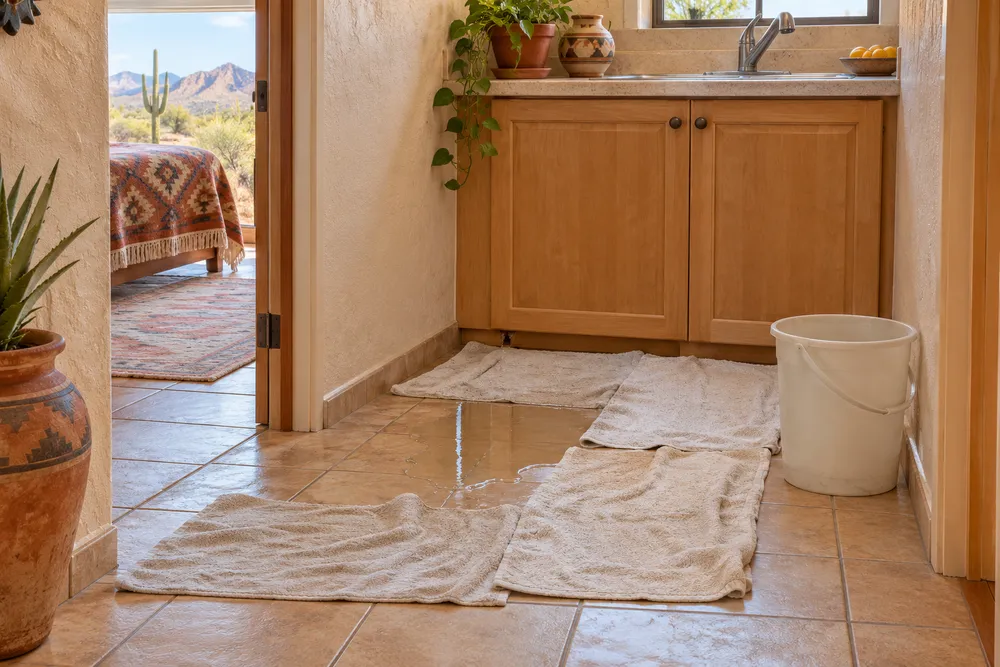
Spread towels over the puddle, set a pan or bucket under any drip and carry rugs, boxes and electronics to a dry room.
Call us
Explain what failed, the spot where water first showed up and which valves you have closed. We can then send a licensed plumber who works locally.
Do not wait to see whether the leak stops on its own. Water moves under baseboards, into cabinets and through drywall faster than most people expect, and a few minutes of action now spares hours of drying later.
In any plumbing emergency, close the water first
Every fixture in your home has a way to stop the water. Sinks and toilets have small valves on the wall below them. Turn them clockwise until they stop. A valve that refuses to move should be left alone, since old brass stems tend to break under pliers and leave you worse off.
When the leak comes from a pipe in a wall, the ceiling or the slab, close the main valve. On most Bullhead City homes it sits where the supply line enters the house, often near the front hose bib or inside the garage. Our guide to finding the main water valve shows where to look.
Once the main is closed, open a faucet at the lowest point of the house to drain the pressure from the pipes. The leak will slow to a trickle and then stop.
Keep electricity and water apart
Of everything that can go wrong during a leak, a live wire in a puddle is the worst. Standing water can carry current from a submerged cord, an outlet low on the wall or an appliance sitting in the puddle.
Never step into standing water to reach a plug or a switch. When the breaker panel sits somewhere dry and easy to reach, flip off the breakers feeding the flooded rooms. If it is not, leave the area and wait for help.
Stay out of the water and call for help if
- Water is coming through a ceiling near a light fixture
- An outlet, power strip or extension cord is under water
- The washer, dryer or a freezer is standing in the leak
- You hear buzzing or see sparks anywhere near the wet area
- The breaker panel itself is wet or you would have to cross water to reach it
Gas smell near the heater? Get everyone out first
Many water heaters in Bullhead City burn natural gas or propane. A strong smell of rotten eggs near the heater means gas is escaping. Leave every light switch exactly as it is, keep flames and lighters away and let the professionals locate the gas leak.
Get everyone outside and well away from the house before you dial the gas company or 911. Once the gas side is made safe, call us about the water side, and a plumber can look at the heater and its connections.
Where to shut off each fixture
Most plumbing emergencies start at one fixture. Closing the valve right at that fixture lets you keep water running to the rest of the house while you wait.
| Fixture | Where the valve is | What to do next |
|---|---|---|
| Toilet | On the wall behind the bowl, near the floor | Turn it clockwise, then hold the flapper down if the bowl is still filling. Read about toilet repair. |
| Kitchen or bathroom sink | A pair of small valves in the cabinet, feeding the hot and cold sides | Close both, and catch drips from the trap and hoses in a shallow pan. |
| Dishwasher | In most kitchens it shares the hot supply valve beneath the sink | Close it and switch the dishwasher off at the panel or unplug it if the plug is dry. |
| Washing machine | Two taps in the recessed box on the laundry wall | Close both and keep the drain hose in place so the tub does not empty onto the floor. |
| Water heater | On the cold supply line that feeds the tank from above | Close it, then turn off the gas or the power to the heater. |
| Pipe in a wall, ceiling or slab | No fixture valve, use the main valve | Close the main and open a low faucet to drain the pressure. |
If a valve does not stop the flow completely, it may be worn or clogged with scale. Close the main instead and tell us about the valve when you call.
How to turn off a water heater safely
A leaking water heater can empty a lot of hot water onto the garage floor. Here is how to make each type safe.
Gas tank heaters
Shut the supply valve on the cold line feeding the tank. Next, set the dial on the heater's gas valve to the off or pilot position. Leave the drain alone on a leaking tank, because the water inside can scald and an old drain valve may give way.
Electric tank heaters
Switch the heater off at its own breaker before you touch anything else. After that, shut the cold supply to the tank. If the floor around the heater is wet, flip the breaker from a dry spot only.
Tankless heaters
Turn the unit off at its power switch or breaker, then close the isolation valves on the water lines below it. Many tankless units hang on an outside wall here, so check the wall and the ground under the unit for water.
When the tank itself is leaking
Water coming from the body of the tank, rather than a fitting, usually means the tank has rusted through and cannot be patched. Shut it down as above, and while you wait you can read how a plumber handles a failing tank heater or a tankless unit with faults.
Details to have ready before you phone us
The more the plumber knows up front, the better the chance the needed parts are already on the van. Gather these first.
- The fixture or pipe you think is leaking, or the room where water first appeared
- Whether the water has stopped since you closed a valve or the main
- The type of pipe you can see, such as copper, PEX or plastic
- The age of the water heater and whether it burns gas or uses electricity
- Whether your home sits on a slab and the floor feels warm anywhere
- Any smell of gas, burning or sewage, and anything electrical that got wet
- Your full street address and a phone number where you can be reached
If you have photos of the leak or the damaged part, keep them on your phone. They help the plumber understand what happened before the water was shut off.
The plumbing emergency calls we hear most, and what to do for each
Open the one that matches what is happening in your home right now.
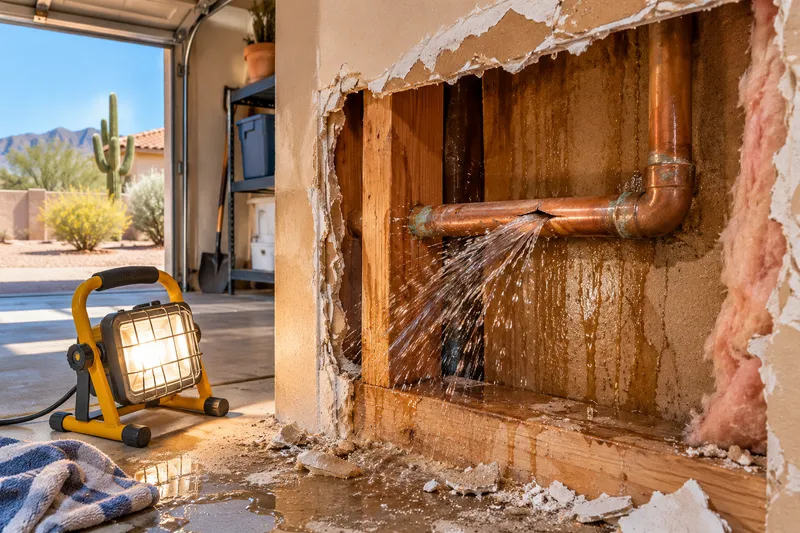
A pipe has burst or is spraying water
Close the main valve at once and open a low faucet. Move anything you can away from the spray and soak up the water you can reach.
A burst pipe needs the damaged section cut out and replaced. Our pipe repair page explains how a plumber finds weak spots on the rest of the line.
If the pipe is in a hot attic or an outside wall, mention that on the call. Heat and the occasional cold night both put extra strain on those runs.
A toilet is overflowing
Lift off the tank cover and hold the rubber flapper shut by hand so the bowl stops filling. Then turn the valve behind the toilet. Leave the handle alone until the blockage is gone.
If plunging does not clear it, or other drains gurgle when you run water, stop using the plumbing and call us.
Water is coming up into a tub or shower
Water rising into a tub when you flush or run a sink means a drain line is blocked further down. Stop running water anywhere in the house so it does not overflow.
Wastewater can carry germs, so wear rubber gloves for any cleanup and keep kids and animals out of the room. A drain cleaning visit clears blockages in the lines inside the home.
Tell us on the call which fixtures are backing up and which still drain, because that tells the plumber where the blockage is likely to be.
The floor feels warm and you hear running water
A warm patch on tile or carpet with the sound of running water often means a hot water pipe is leaking under the slab. Close the main valve and the cold valve on the water heater.
Read about slab leak repair and book leak detection so the leak is pinpointed before any concrete is opened.
Water is leaking under a sink
Shut both sink valves, empty the cabinet and wipe its base dry so the particleboard does not swell. A supply hose, a valve or a loose drain joint is usually to blame.
This can often wait for a booked visit once the valves are closed, as long as the leak has stopped. Worn hoses, valves and drain joints are all covered on the faucet and sink repair page.
Protecting your home and belongings during a plumbing emergency
Once the water is off, the next job is limiting the damage. Pull rugs, boxes and furniture away from the wet area and set wooden furniture legs on foil or plastic lids so they do not stain the floor.
Open cabinet doors under sinks so the wood can dry, and run fans if the area is safe to power. Our dry desert air clears small spills fast, yet moisture that soaks below the flooring or behind drywall lingers far longer than the dry surface suggests.
Snap pictures of every wet area before any cleanup starts. They help you remember what happened and are useful if you speak to your insurance company later.
Throw out anything soaked with wastewater from a backed up drain, such as rugs or cardboard boxes. Clean hard floors with hot soapy water and gloves, and let the room air out before anyone walks barefoot there again.
Your jobs before the plumber arrives and after the repair
A plumbing emergency does not end when the leak stops. These two lists cover the hour before the visit and the days after it.
Before the plumber arrives
- Keep the main or fixture valve closed, even if the leak looks finished
- Clear a path to the leak, the water heater and the main valve
- Move cars out of the garage if the heater or the main valve is in there
- Put pets in a closed room so the door can stay open for the plumber
- Write down when the leak started and roughly how long water ran
After the plumber leaves
- Run each faucet you used during the repair for a minute to clear air and grit
- Check the repaired joint and the floor below it the next morning
- Keep fans running until the cabinet, baseboard or carpet is fully dry
- Watch the water meter for a day to confirm nothing is still leaking
- Ask the plumber which valve to close first if the same pipe ever leaks again
Questions people ask in the middle of a plumbing emergency
Should I turn off the main water valve even for a small leak?
If you can close a valve right at the fixture and the leak stops, that is enough. If you are not sure where the water is coming from, close the main. It is better to be without water for a while than to let a hidden leak keep running.
Can I keep using the toilet after I shut off the water?
You can flush once with the water left in the tank. After that, you can pour a bucket of water into the bowl to flush it. Do not use any drain that is backing up.
When can I open the main valve again?
Only if you know the leak was at a fixture you have isolated. If the leak was in a wall, the ceiling or the slab, leave the main closed until a plumber has repaired the pipe.
The main valve at the house is stuck. What now?
Leave it as it is and use the backup. A second shut off sits on your side of the water meter out by the street. Our guide to finding the main water valve explains how to spot that valve and close it safely.
My water heater is leaking. Will I lose hot water?
Yes, it is the right move for now. Closing the cold supply stops the tank refilling, so the leak slows and you will have no hot water until it is repaired. That is the safe trade until a plumber has looked at it.
Could the leak be under my slab?
Watch for tile that feels warm underfoot, a hiss or trickle you can hear while every faucet is closed, fresh cracks in the flooring and a meter that never rests. Our guide on why a water bill climbs explains the meter test step by step.
Can a frozen pipe burst in Bullhead City?
It is rare, but it can happen on the coldest winter nights, mostly to pipes and hose bibs on outside walls. If a pipe splits, close the main valve and call us just as you would for any other burst pipe.
Must I stay home for the repair visit?
Yes, or someone you trust needs to be there. The plumber will need to see the problem, explain the repair and get a yes from you before starting work.